

A significant portion of Edgecliff Hearing Clinic’s work involves testing kids for hearing loss using audiometric examination. Children’s development greatly depends on their ability to hear. For many other professional evaluations, like those with an ENT, paediatrician, or speech pathologist, a paediatric hearing test will be necessary.
It takes expertise and experience to evaluate hearing in children. We may utilise a variety of audiological tests, which are typically not stressful for kids, depending on their age and aptitude.
Three main categories of testing exist:
- Behavior-based assessments
- Tests of speech perception
- Testing that is objective
Testing Behaviour
The developmental stage of your child will determine the kind of behavioural assessment we employ. Behaviour changes in reaction to sound are the basis for the infant hearing pediatric hearing evaluation. During examinations, your youngster might have ear canal implants or headphones on.
Audiometry of Visual Reinforcement for Infants and Young Children
Age range: six months to two years
How it operates: Your youngster will be seated between two visually reinforced reward boxes, each with a speaker on top. One of the boxes on the left or right makes a sound. A visual incentive, such as a puppet in the box, is shown to the child as they turn to the sound. During the infant hearing screening, we test your child’s hearing once they understand that when a sound is played, they should turn to one of the boxes. To determine which levels they can hear, the audiometric examination includes a variety of amusing warbles or tones that are progressively softer.
Preschoolers’ Conditioned Play Audiometry
Your child must be able to follow basic directions and orders and be between the ages of 20 months and 5 years.
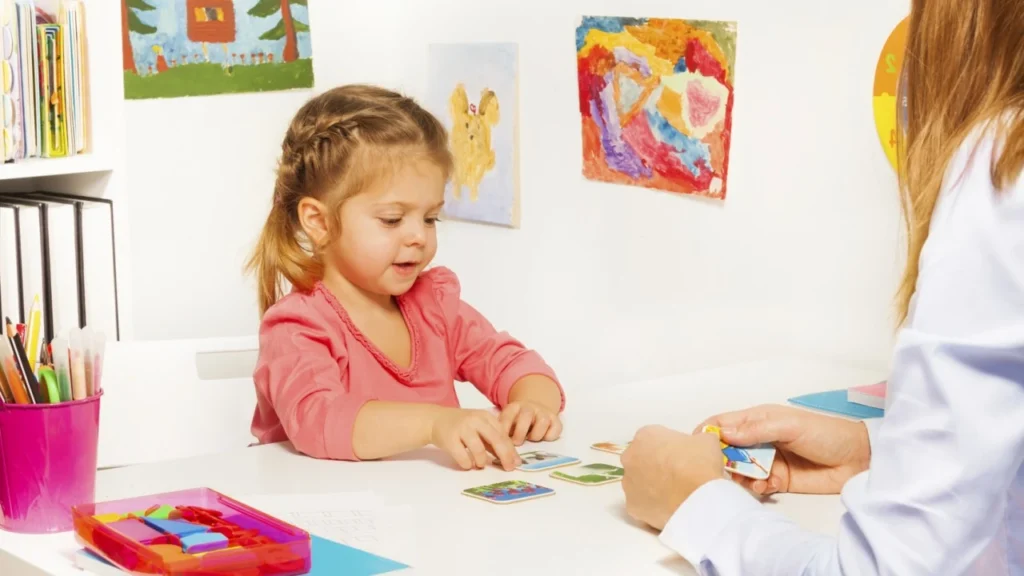
How it works: every time your child hears a sound, they will be asked to complete an activity. Fun games like throwing marbles into a marble race or arranging pegs on a pegboard are used in the audiometry test exercises.
Pure Tone Audiometry for Children
Age: School age and older
How it works: during the pure tone audiometry test, your child will be asked to press a hand-held button whenever they hear a sound played to them. Tones of varying frequency and intensity will be played,. The loudness of the sounds is reduced until they stop responding.
Tests of Speech Perception
The findings of these tests can be compared to and verified by the results of other testing. From here, we can determine whether your youngster can distinguish subtle variations in English sounds that are crucial for comprehension. The child’s age and ability will determine the test that is used in the paediatric hearing assessment.
Tests of Toys
From a collection of toys with rhyming names but distinct noises, your youngster will be asked to choose one. For instance, “car” or “star,” and “key” or “tree.”
PLOTT Visual Vocabulary Test
This is the toy test in pictorial form. Here, your youngster will be asked to indicate one of twelve drawings of objects that contain various vowels, such as “key,” “car,” and “book.”
AB Words Recorded
After hearing a word on a recorded list, your child will be asked to repeat it. Your child will be exposed to them at moderately loud and gentle volume levels.
Objective Examination
These tests check your child’s ears for possible hearing issues without requiring a response.
Tympanometry
What is tested:
- Middle ear fluid
- Hole in the eardrum
- Wax-obstructing ear canal
- Movement of the ear drum.
This works by forcing air pressure into the ear canal, which causes the eardrum to oscillate.
Acoustic reflex measures
The test measures the contraction of a small muscle in the middle ear.
How it works: Different levels of sound are played to evaluate the acoustic reflex and diagnose the kind of hearing loss.
Otoacoustic emissions.
It tests: the small cochlear hair cells
It operates by monitoring the inner ear’s echoes when a sound is played. These are determined using a tiny probe placed into the ear canal.
Read more about our Sydney audiology services.

